
Critical Minerals and the New Economic Frontier: A Path Toward Economic Growth and Sustainability in Nigeria
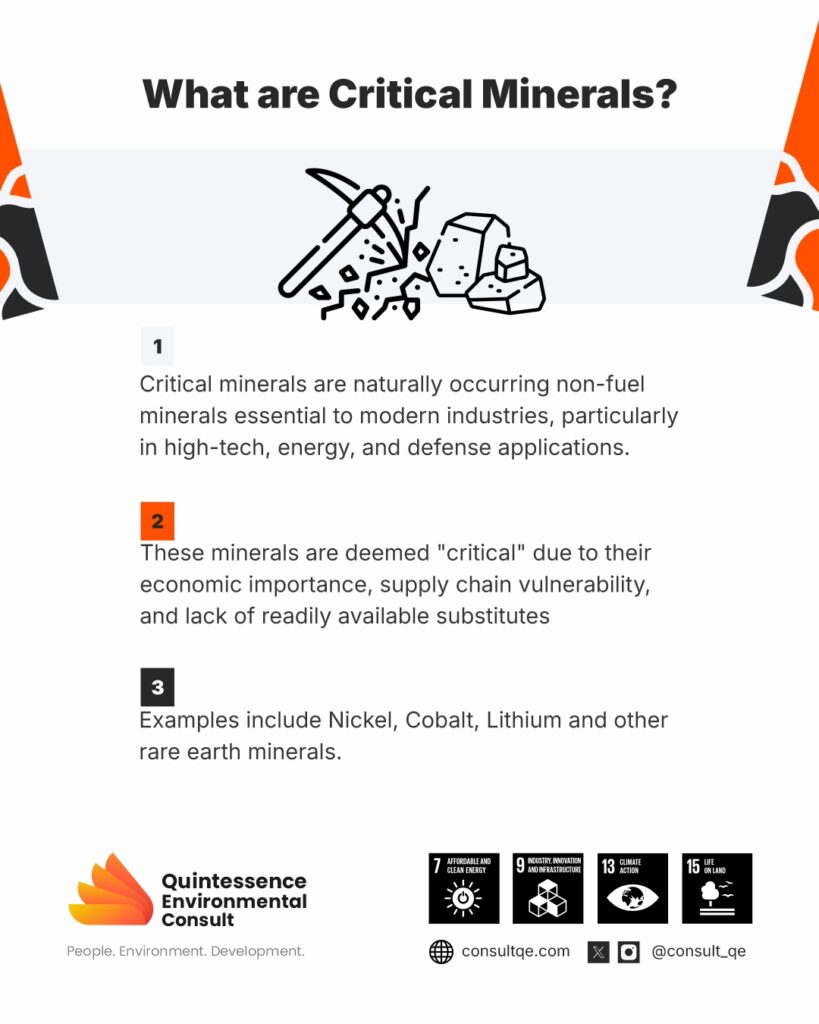
Key Takeaways Critical Minerals: Drivers of the New Global Economy Critical minerals are the fundamental components behind electric vehicles (EVs), solar panels, wind turbines, and other advanced electronics. With the global push for clean energy and innovation, the demand for these resources has skyrocketed. The Global Race Is On, Can Nigeria catch up? Countries such as the Democratic Republic of Congo, Chile and Indonesia are already dominating the critical minerals market. Although Nigeria possesses significant resources, it is still playing catch-up. Tin & Tantalum in Jos, Riruwai, Kogo, and other younger granite complexes have been mined since the 9th century. 3. Unlocking Nigeria’s Mineral Potential The airborne geophysical survey initiated in 2005 collected data in magnetic, radiometric, gravity, and electromagnetic domains for about 44% of Nigeria in 2006 and 55% completion in 2010 should be reviewed and given national priority. The Big Problem Nigeria’s critical minerals sector faces three major challenges: weak policies leading to missed opportunities, unregulated mining causing severe environmental damage, and a lack of local processing capacity, resulting in raw material exports instead of value addition. The Game Plan: How Nigeria Can Win Make Mining Laws Stronger: Regulations should encourage responsible mining, local processing, and transparency (no more illegal deals). Go Green: Mining shouldn’t destroy the land; eco-friendly techniques, land restoration, and community-driven projects should be a must. Invest in Mining Technology & Infrastructure: Nigeria needs processing plants, better transport networks, and modern mining tools to compete globally. Introduction Critical minerals are naturally occurring non-fuel minerals or materials essential to modern industries, particularly in high-tech, energy, and defense applications. These minerals are deemed “critical” due to their economic importance, supply chain vulnerability, and lack of readily available substitutes. In recent times, we have witnessed critical and rare earth minerals form integral parts of peace negotiations in the Russia-Ukraine war as well as the American Foreign Policy. In today’s global energy transition, minerals such as lithium, cobalt, nickel, and rare earth elements such as are indispensable for producing clean energy technologies, including solar panels, wind turbines, rechargeable batteries for electric vehicles (EVs), and grid storage systems. Developing countries hold large reserves of these minerals; for instance, African countries account for about 25 % of global reserves, including 19% of those needed for EVs. Global Demand and the Role of Developing Nations in the Global Supply Chain The global demand for critical minerals has surged due to their essential role in modern industries, clean energy technologies, and advanced manufacturing. These minerals are crucial for economic growth, technological advancement, and national security. For example; Clean Energy Transition: Minerals like lithium, cobalt, nickel, and rare earth elements (REEs) are vital for manufacturing batteries, solar panels, wind turbines, and electric vehicles (EVs). The global drive toward net-zero carbon emissions has further intensified the demand. Technological Advancements: Electronics, semiconductors, telecommunications, and defense systems rely on critical minerals such as tantalum, gallium, and neodymium for microchips, magnets, and advanced optics components. Industrial Growth & Infrastructure Development: The construction, automotive, and aerospace industries need materials like copper, aluminum, and titanium for wiring, machinery, and transportation. Geopolitical Considerations & Supply Chain Security: Many critical minerals are concentrated in specific regions, making supply chains vulnerable to geopolitical tensions, trade restrictions, and resource nationalism. Defense & Aerospace Applications: Minerals like tungsten, vanadium, and rare earths are essential for military equipment, jet engines, and missile systems, making them strategic assets for national security. This growing dependence on critical minerals has led countries and companies to secure their supply chains, invest in mineral exploration, and develop recycling technologies to meet demand sustainably. Developing nations are increasingly becoming key suppliers of essential minerals to the global market. For instance, the Democratic Republic of Congo contributes approximately 68% of the world’s cobalt imports, Chile plays a significant role in lithium exports, and Indonesia accounts for nearly 48% of global nickel exports. Since 2010, the demand for minerals per unit of energy generated has surged by 50%, largely due to the rising adoption of renewable energy sources. Projections for a net-zero emissions scenario indicate that, between 2022 and 2030, demand for certain critical minerals could grow dramatically—with cobalt up by 115% and lithium by an astonishing 454%.In response to the rising demand, a significant number of critical mineral projects were initiated in 2021 and 2022, marking a substantial increase in global efforts to secure mineral supply chains. (UN Trade and Development). The specific type and quantity of critical minerals required for the energy transition depend on their intended applications. Lithium, cobalt, and graphite, for example, are essential components of lithium-ion batteries used in electric vehicles (EVs). Prior to their use in advanced technologies, these minerals undergo processing and refining to enhance their purity, improve performance characteristics, and optimize their suitability for various applications. Compared to their raw forms, refined materials hold significantly higher economic value, offering mineral-producing developing nations opportunities to foster downstream industries and stimulate economic growth (UN Trade and Development). The New Gold Rush: Nigeria’s Untapped Treasure While Nigeria is not yet a major global supplier, its subsoil conceals a treasure trove of critical minerals such as lithium, cobalt, nickel, and rare earth elements- resources that power everything from electric vehicles to smartphones and solar panels distributed across different states. These resources are the backbone of the global energy transition, and countries worldwide are prompted to secure their supplies. Some of the key critical minerals found in Nigeria include: Lithium: Geological surveys have identified lithium-rich sites in Nasarawa, Kogi, Kwara, Ekiti, Cross River, and Bauchi. Nickel and Cobalt: In 2015, an Australian firm discovered a significant volume of high-grade nickel deposits in parts of Kaduna, Kogi, and Plateau. Nigeria is estimated to possess five million metric tonnes of Nickel and one of Africa’s largest reserves of cobalt. According to the Nigerian Geological Survey Agency (NGSA), the majority of Nigeria’s nickel reserves are located in Kaduna, Kebbi, Nasarawa, and Taraba. Rare Earth Elements (REEs): The key REEs found in Nigeria include Neodymium (Nd) (used in high – strength magnetics and various electronic applications), Cerium (Ce) (used
Transforming Nigeria’s Power Grid: Pathways to Sustainable and Reliable Transmission and Distribution Infrastructure
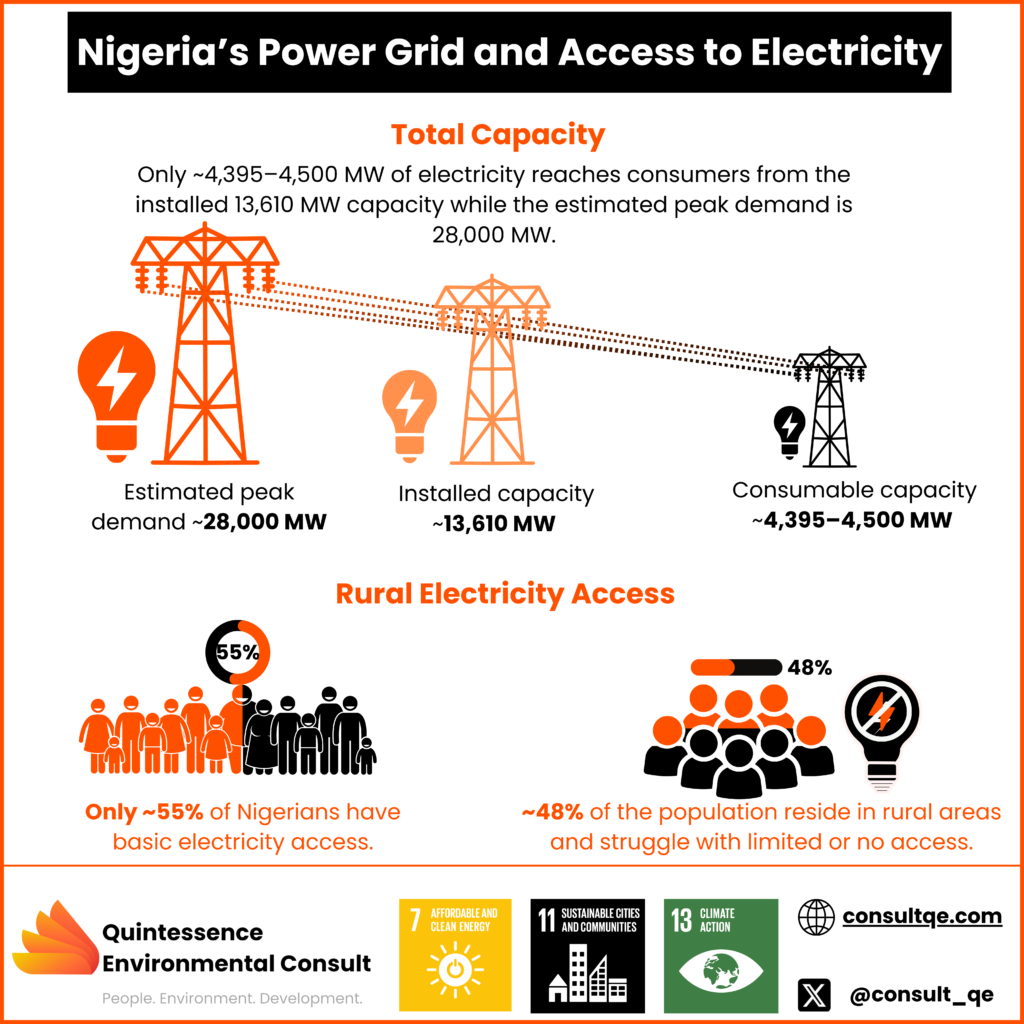
KEY TAKEAWAYS: Aging Power Grid with High Losses: Nigeria’s power grid is outdated and loses about 40% of generated power due to inefficiencies, far above the global standard of 8-12%, limiting reliability and revenue. Demand for Investment: Nigeria’s T&D system needs approximately $1.5 billion annually for a decade to modernize, but government appropriation alone won’t meet this demand, highlighting the importance of private investment. Microgrids as a Rural Solution: Decentralized microgrids can cut power costs by up to 40% for rural communities, providing reliable, local energy and easing pressure on the main grid. Smart Grids for Efficiency: Smart grid technology could reduce power losses by 30%, enhance grid resilience, and support the integration of renewables, creating a more adaptable power system. Need for Public-Private Partnerships and Policy Reform: Strategic public-private partnerships and streamlined regulations are essential to attract investment and ensure reliable, quality service across Nigeria’s power infrastructure. INTRODUCTION Imagine a Nigeria where electricity is constant—no more sudden blackouts, no more generators roaring through the night, and no more limits on economic growth due to unreliable power supply. For most Nigerians, this remains a distant dream as our power sector continues to grapple with significant challenges, especially in its transmission and distribution (T&D) infrastructure. Yet, precisely this infrastructure is key to unlocking reliable power and unleashing Nigeria’s full potential. This post explores the current state of Nigeria’s electrical grid, its critical challenges, and actionable strategies to advance towards modernized and sustainable electrification. Utilizing data from industry analyses and effective global frameworks, we have outlined a progressive sustainable solution, patterned for Nigeria’s energy future. NIGERIA’S POWER GRID AND ACCESS TO ELECTRICITY Nigeria’s current power grid ranks among the least reliable worldwide, with technical and operational inefficiencies significantly impeding electricity access. Only 55% to 60% of Nigerians have basic access to electricity. Nevertheless, even this limited coverage is often interrupted due to unreliable infrastructure and frequent outages. Despite a reported installed generation capacity of 13,610 MW, grid inefficiencies mean that only about 4,395–4,500 MW reliably reach consumers, far short of the estimated peak demand of 28,000 MW. Long, centralized transmission lines lead to high technical losses, particularly as they often exceed capacity, creating bottlenecks that result in regular “grid collapses” under high demand (6). The Nigerian Electricity Regulatory Commission (NERC) reports the systemic issues of the power sector, including outdated equipment and lack of investment in transmission and distribution infrastructure. As the grid struggles to meet current demand, a decentralized approach is becoming more attractive. Decentralized systems, including renewable microgrids and mini-grids, could alleviate strain on the central grid while providing reliable power to remote areas. (3). MAJOR CHALLENGES IN NIGERIA’S TRANSMISSION AND DISTRIBUTION SYSTEMS Aging Infrastructure and Chronic Underinvestment The infrastructure of Nigeria’s transmission and distribution (T&D) is outdated, with decades-old lines, transformers, and substations that are underfunded and therefore operate far below optimal capacity. The World Bank estimates that Nigeria requires around $1.5 billion annually for the next ten years to modernize its T&D network adequately. Despite this need, investment levels have remained insufficient, as the power sector relies on inconsistent government budget allocations and occasional funding through partnerships, falling short of the comprehensive capital required for critical upgrades (11). High Power Losses, Both Technical and Non-Technical Nigeria experiences some of the highest transmission and distribution losses globally, with an estimated loss rate of 40% compared to the global standard of 8-12% (12). These losses stem from both technical issues—such as aging infrastructure and extended transmission distances—and non-technical issues, including electricity theft and inaccurate billing practices. Studies show that these inefficiencies severely reduce revenue, limiting the utilities’ ability to reinvest in essential grid upgrades and maintenance, thereby perpetuating a cycle of poor reliability and service limitations. (1) Limited Access for Rural Communities Approximately 48% of Nigeria’s population resides in rural regions, where access to the main electricity grid remains limited or unavailable. Extending the transmission and distribution (T&D) network to these remote areas is challenging, requiring an estimated $8 billion investment as estimated by the Rural Electrification Agency (REA). This considerable cost and the logistical barriers in reaching these underserved communities have hindered electricity access and slowed local economic development in areas where power is urgently needed (12). Policy and Regulatory Complexities Nigeria’s regulatory environment remains complex and often unpredictable, deterring private investment. Reforms intended to attract private players often falter due to inconsistent policies, such as sudden tariff changes and contract delays. For example, a 2019 tariff increase meant to improve cost recovery was repeatedly postponed, creating uncertainty. These shifts make investors wary, stalling the long-term projects crucial for strengthening Nigeria’s T&D infrastructure.(6) PATHWAYS TO TRANSFORM NIGERIA’S TRANSMISSION AND DISTRIBUTION INFRASTRUCTURE Investing in Smart Grid Technology Smart grids use digital monitoring and automation to manage power distribution more effectively, allowing for faster responses to fluctuations and reducing blackout risks. This technology reduces energy loss, enhances grid resilience, and allows for better integration of renewable energy sources, such as solar and wind, into the power supply scheme. Smart grids also reduce technical and non-technical losses by up to 30%. Furthermore, renewable integration through smart grids can support Nigeria’s decarbonization goals, aligning with commitments to reduce greenhouse gas emissions by 47% by 2030 as per its Paris Agreement obligations (2). Though achieving these improvements will require significant capital, partnerships with international organizations and private stakeholders can help Nigeria develop a more sustainable, reliable power infrastructure. Expanding Decentralized and Microgrid Solutions Microgrids offer an effective solution for powering Nigeria’s rural and remote areas, operating either independently or alongside the national grid. Microgrids are often used to power remote or rural areas where extending the central grid is not feasible and they can deliver cleaner and more cost-effective electricity. They rely on distributed energy resources (DERs), such as small-scale solar panels, wind turbines, and batteries, providing localized, reliable, and resilient power. Research by the Rocky Mountain Institute and Nigeria’s Rural Electrification Agency indicates that implementing microgrids could cut electricity costs for rural households by roughly 40%, while greatly enhancing their energy supply’s
The Triple Planetary Crisis: What Is It?

The Triple Planetary Crisis: What Is It? The triple planetary crisis isn’t just a catchy phrase; it represents the critical juncture we find ourselves in. Here’s a breakdown of the three components: The Interconnected Web These three crises aren’t isolated; they weave together, exacerbating one another. Here’s how: Solutions and Hope Remember, we’re not powerless. By understanding the triple planetary crisis and taking action, we can steer our planet toward a more sustainable and resilient future. Sources: UNFCCC, AIDA Americas
Innovative Green Technologies Transforming the Industry

Introduction: The environmental sector is constantly evolving with new technologies that promise to revolutionize how we address environmental challenges. At Quintessence Environmental Consult, we stay at the forefront of these innovations to provide our clients with the best solutions. Body: Conclusion: Embracing innovative green technologies is essential for creating a sustainable future. At Quintessence Environmental Consult, we are committed to helping our clients leverage these advancements to achieve their environmental goals. Contact us today to find out how we can support your green initiatives.
The Importance of Environmental Assessments for Businesses

Introduction: Environmental assessments are crucial for businesses looking to minimize their impact on the environment and comply with regulations. At Quintessence Environmental Consult, we specialize in providing comprehensive assessments to help businesses identify and mitigate environmental risks. Body: Conclusion: Environmental assessments are a vital tool for businesses aiming to operate sustainably and responsibly. Contact Quintessence Environmental Consult to learn how we can assist your business in achieving its environmental goals.