
Reimagining Katsina: A Green Growth Vision for All
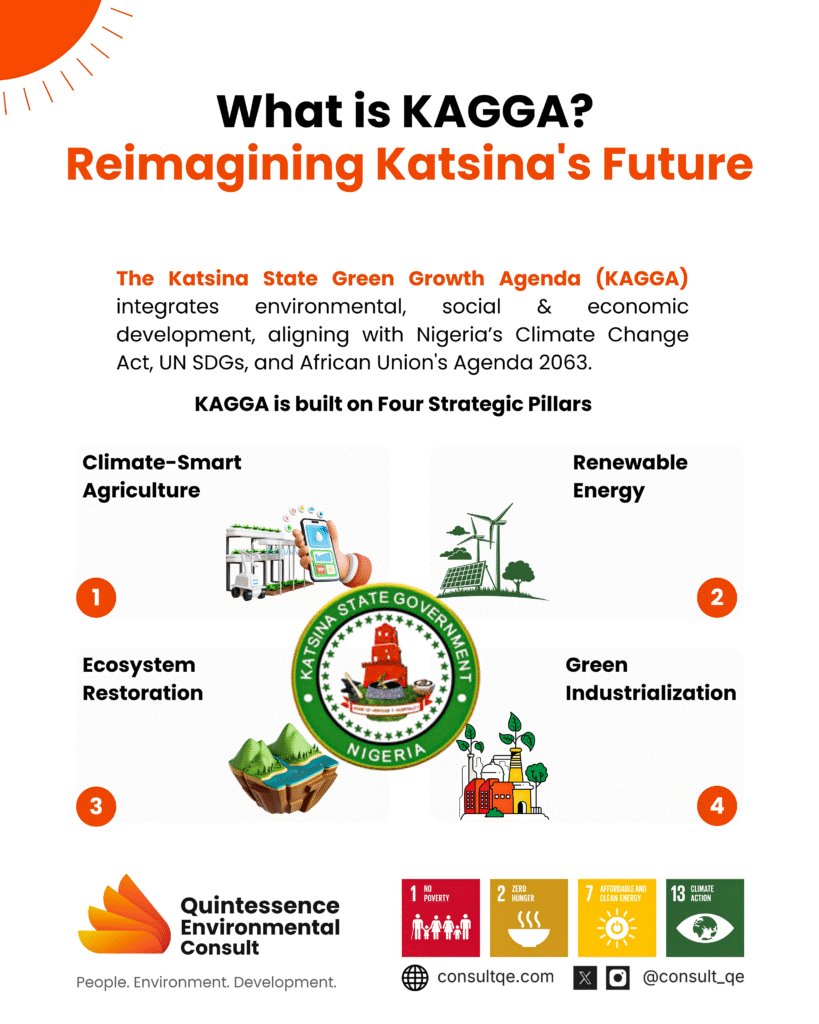
In an era defined by the need for sustainable development, Katsina State has taken a bold and strategic step forward. The Katsina Green Growth Agenda (KAGGA) is more than just a policy document, it is a transformative vision designed to align environmental resilience with economic growth.
ICT as a Catalyst for Climate Action: Turning Bytes into a Better Planet
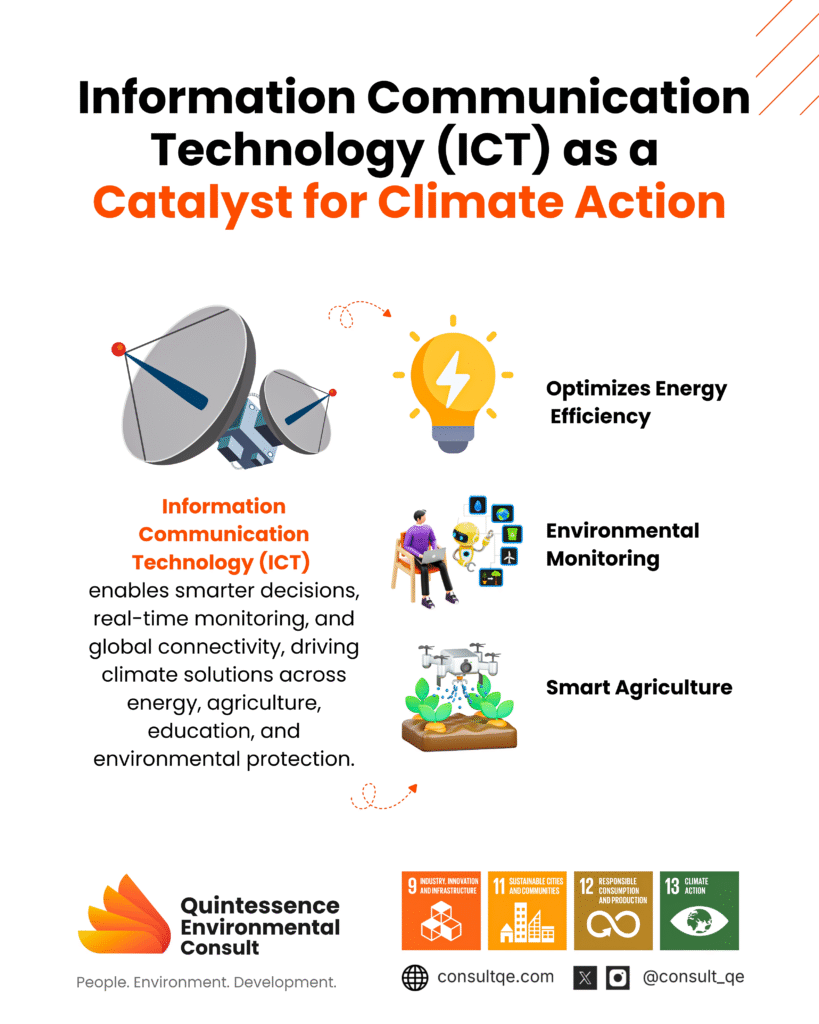
TAKEAWAY Technology fuels transformation: ICT is the catalyst behind innovations that are reshaping how we fight climate change across energy, agriculture, waste, and education. Real-time data saves real-world ecosystems: From satellites to sensors, ICT tools give us the intelligence we need to protect forests, track emissions, and predict disasters. Digital solutions are accelerating the green economy: Clean tech startups, green data centres, and digital agriculture are making sustainability profitable and scalable. ICT bridges the global climate knowledge gap: Online platforms are giving communities access to environmental data, resources, and training. The future of climate action is digital: As ICT continues to evolve, its potential to drive systemic climate solutions is just beginning. INTRODUCTION Can climate change be hacked? Not in the literal sense, but ICT is doing something close to it. From satellites mapping deforestation in real time to AI models predicting floods weeks in advance, technology is fast becoming our most powerful ally for climate change mitigation and adaptation. In a world where every second matters, ICT transforms awareness into action and data into decisions. It’s not just about fighting climate change, it’s about staying one step ahead. BACKGROUND Climate change is no longer a distant threat, it’s a present reality. Rising temperatures, shrinking glaciers, and increasingly violent storms are a wake-up call. The Intergovernmental Panel on Climate Change (IPCC) warns that we have until 2030 to cut global emissions in half or risk irreversible damage [1]. But while the threat looms large, a powerful solution lies in our hands in the form of mobile phones, internet access, and digital infrastructure. Information and Communication Technology (ICT) includes everything from software and sensors to broadband and blockchain. According to the Global e-Sustainability Initiative (GeSI), ICT has the potential to reduce global CO₂ emissions by 20% by 2030, even though the sector contributes only about 2-3% of emissions itself [2]. This is a leverage point: When deployed strategically, ICT is not just part of the solution; it amplifies the solution. Tracking Environmental Challenges, One Pixel at a Time Technology allows us to see what was once invisible. Satellite systems operated by the National Aeronautics and Space Administration (United States) (NASA), the European Space Agency (ESA), and private firms can now detect forest loss, melting ice caps, and methane (CH4) leaks from space. These are critical tools in shaping climate policy and enforcement. For instance, Global Forest Watch uses satellite data and Artificial Intelligence (AI) to monitor forests in real-time, alerting authorities of illegal logging within hours [3]. Meanwhile, the Environmental Insights Explorer by Google helps over 3,000 cities globally track building and transport emissions, helping mayors make data-driven climate decisions [4]. Without ICT, these insights would take months or never come at all. Smart Agriculture and Green Tech Agriculture, a major industry which emits greenhouse gases, is undergoing a digital revolution. ICT-powered tools such as precision farming, drone surveillance, and mobile weather forecasting are reducing input waste and increasing yields. In Kenya, applications like iCow and FarmDrive are helping smallholder farmers adapt to unpredictable weather by offering agricultural tips, weather updates, and access to microloans through mobile-based platforms. In India, sensors connected to the Internet of Things (IoT) are enabling farmers to control irrigation systems via SMS, conserving water while boosting food security. These solutions aren’t just reducing emissions, they are safeguarding our livelihoods and conserving the earth’s natural resources.. In the energy sector, smart grids are optimizing power distribution, cutting losses, and integrating renewables more efficiently. In fact, according to the International Energy Agency (IEA), smart energy systems powered by ICT could reduce electricity waste by up to 30% by 2030, aligning with global aligning with global climate goals[5]. Digital Empowerment and Education for Climate Climate literacy is no longer limited to scientists. Through mobile apps, virtual classrooms, and gamified learning platforms, ICT is making environmental education accessible and engaging. Applications like Earth Hero and Klima turn climate action into a personal mission, helping users calculate, reduce, and offset their carbon footprints. UN CC: Learn offers free online courses that have educated over 500,000 learners globally on climate resilience, green jobs, and adaptation strategies [6]. In vulnerable communities, ICT is also vital for early disaster warning systems. Text-based alerts on floods, wildfires, and storms have saved thousands of lives in countries like Bangladesh and the Philippines. That’s the power of a single byte in protecting entire populations. ICT and Circular Economy Innovation ICT is the backbone of the emerging circular economy, an economic model focused on designing out waste and keeping resources in use. Smart inventory systems, blockchain-powered product tracking, and mobile platforms for sharing or reusing goods are helping consumers and businesses close the loop. Companies like Too Good To Go, used widely in European countries such as Denmark, France, United Kingdom and Germany, help reduce food waste by using mobile applications that let consumers buy unsold food from restaurants, bakeries, and supermarkets at a discounted price; instead of throwing away perfectly good food at the end of the day. These businesses list it on the application, and users can reserve and pick it up at a lower cost. This way, food that would have gone to waste gets eaten, helping both the environment and people looking for affordable meals. Startup companies like Loop which launched in the United States, France and the United Kingdom, use digital platforms to manage reusable packaging systems, allowing consumers to return and reuse branded containers instead of relying on single-use packaging. Blockchain, in particular, is enabling transparency in carbon trading, e-waste recycling, and ethical sourcing [7]. These technologies make sustainability measurable, accountable, and profitable. Youth, Climate, and Digital Advocacy Young people are leading the digital charge for climate justice. Social media platforms have become megaphones for international movements like Fridays for Future and Stop Ecocide. With nothing more than a smartphone, youth activists from Africa to Asia are organizing protests, sharing climate stories, and pressuring world leaders into action [8]. Additionally, platforms like Youth Climate Lab and Connect4Climate use digital storytelling and
Understanding Plastic Credit as a Market-Based Scheme Incentive for Plastic Waste Management

KEY TAKEAWAYS Plastic credits transform waste management into a profitable venture by rewarding organizations that collect or recycle plastic waste and enabling producers to offset their footprints through credit purchases. Multiple globally recognized bodies (e.g., Verra’s Plastic Credit Standard, Plastic Bank, PCX, GPP) employ differing verification criteria, leading to a lack of a universally accepted standard. Implementing plastic credit in Nigeria will bridge the financing gap and encourage plastic collection systems that were otherwise not economical. Transparency, universally accepted standards, and rigorous verification by third-party organisations are essential for the success of the plastic credit system and the reduction of greenwashing. INTRODUCTION According to the world-bank, it is estimated that USD 1.64 trillion of investment will be required by 2040 to tackle pollution[1]. To meet this financial requirement, waste management must be made profitable. Plastic credit is an auditable, tradable, transferable certificate that represents a unit of plastic reduction. The credits are typically earned by organizations that collect and recycle plastic waste, and are bought by organizations that produce or consume plastic to offset their plastic footprint. The revenue made by selling the credit is then used to support plastic waste management programs, resulting in further credit generation. This way, the plastic credit incentivizes waste management by ‘penalizing’ plastic production and consumption while ‘rewarding’ plastic waste prevention. Plastic waste management is a capital-intensive program. In many developing countries, the cost of solid waste management can be as 50% of the total municipal budget [2]. Therefore, there is a need to incentivize plastic waste management by making it sustainable and scalable. The plastic credit system is one innovative way of injecting funds into the waste management program in a sustainable manner. Overall, this acts as an extended producer responsibility (EPR)scheme that will make plastic waste management economically viable and scalable. HOW TO EARN AND TRADE PLASTIC CREDIT All programs and investments that lead to a reduction in plastic pollution typically earn plastic credit after verification and certification by a third-party organization. These include upstream measures aimed at preventing and reducing plastic waste generation and downstream measures such as waste collection and recycling. The credits are issued for specific quantities of plastic waste removed or prevented from entering the environment above a recognized baseline. The baseline refers to the original waste prevention, collection or recycling capability of an organization. This scheme leads to additionality, i.e a net and incremental reduction in plastic waste pollution. Typically, one credit unit equals one metric tonne of plastic waste managed (collected/recycled) beyond that baseline. According to world bank estimate, the value of the unit is 140- 670 USD, depending on the waste collection context and issuing organization[1]. Companies, governments, and individuals who produce or consume plastic can purchase these credits as a way to offset their plastic footprints. CREDIT CERTIFICATION Plastic credit is issued only for plastic collected or recycled above the baseline effort. To ensure transparency, waste reduction efforts must be independently verified by third-party organizations that would then issue a credit certificate. Some of these certification bodies enjoy global recognition, such as: The Plastic Bank, Verra’s Plastic Credit Standard, The Global Plastics Platform (GPP), BVRio, Plastic Credit Exchange (PCX), Zero Plastic Oceans (ZPO), etc [1,3]. These organizations employ different standards for verification and issuance of certificates. This is one of the major issues with the plastic credit since there is no uniformly accepted standard, and credit issued by one organization may not be recognized by a company that has not subscribed to that organization. IMPLEMENTING PLASTIC CREDIT SCHEME IN NIGERIA Plastic crediting can be used as a compliance mechanism within EPR schemes. Producers can purchase plastic credits to meet some of their obligations. If operationalized in Nigeria in a transparent, performance driven and structured manner, plastic credit can bridge the financing gap and encourage collection systems that were otherwise not economical. Setting up a plastic crediting system in Nigeria will involve several key steps, including understanding the regulatory environment, engaging stakeholders, creating a transparent tracking mechanism, and developing infrastructure for collection, recycling, and credit distribution. CHALLENGES WITH PLASTIC CREDIT SYSTEMS Not all plastic waste reduction or recycling projects are equally effective. Some may provide minimal environmental benefits, while others may lead to long-term improvements. One of the key challenges is ensuring that credits are issued only for projects that have a substantial impact. If credits are issued too loosely, without rigorous verification of net impact, the value of plastic credits could drop, undermining the financial incentive for the scheme. Additionally, relying too heavily on plastic credits as an offset mechanism might delay the necessary reduction in plastic production and consumption by companies and encourage greenwashing [1,3]. RECOMMENDATIONS FOR A SUCCESSFUL PLASTIC CREDIT SCHEME Plastic credit should have a clear governance framework that involves external stakeholders from various sectors. The program should use relevant, consistent, universally accepted standards and definitions for measuring impact. The impact should not just pertain to the volume of plastic collected, but also to plastic types, its use, and end point. This is essential because removing one ton of plastic in one context is not the same as removing it in another. Double counting in different schemes or with existing EPR and tax systems should be avoided. The value of Credits should reflect the cost of waste management rather than the material value. This includes the cost of waste management infrastructure and living wages for waste workers. Credit sold to organizations should be transparently reported against the volumes of plastic materials put on the market by the buying companies. Such organization should demonstrate prove they have explored all available waste prevention options given their peculiar situation. These efforts should adhere to the principle of waste management hierarchy by prioritizing reuse and recycling before incineration and disposal of waste. This is essential to prevent organizations from using plastic credit for greenwashing. CONCLUSION Plastic credits are a market-based solution designed to address the global plastic waste crisis by incentivizing plastic waste management. The incentive is provided when plastic reduction efforts generate credit,
CARBON MARKET ECOSYSTEM: SOMETHING FOR EVERYONE!
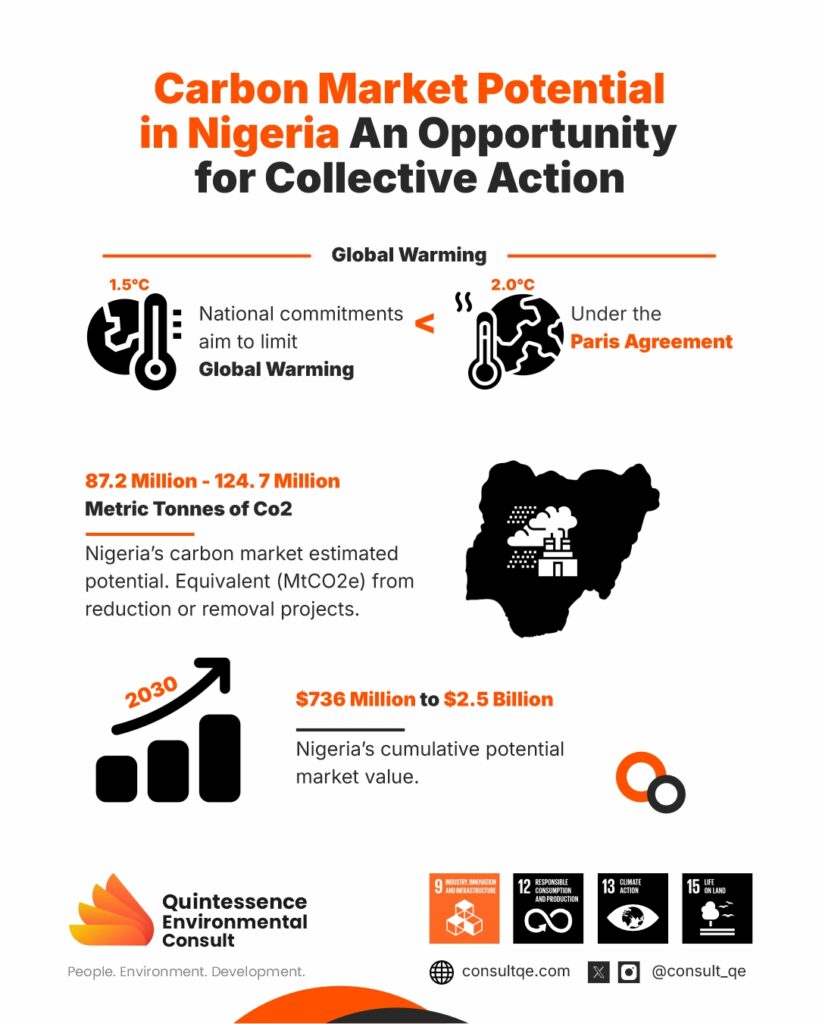
KEY TAKEAWAYS Nigeria’s carbon market potential is estimated at 87.2 to 124.7 million metric tonnes of CO2 equivalent (MtCO2e) from reduction or removal projects. The cumulative potential market value is projected to be between 736 million USD and 2.5 billion USD by 2030. Despite wide challenges in setting up and operationalizing a carbon market system, several opportunities for advancement abound for various stakeholders through participation, collaboration and commercialization of services. The carbon market supports innovative climate adaptation projects, fostering research and innovation. Governments, companies, and individuals can actively participate in the carbon market system as either regulators, project developers, investors, researchers, carbon removal monitors and others. INTRODUCTION Nigeria has a carbon market potential of 87.2 to 124.7 MtCO2e (metric tons of carbon dioxide equivalent) that could be achieved from removal or reduction projects. In addition, Nigeria’s cumulative carbon market potential value stands between 736 million and 2.5 billion USD by 2030. But what exactly is the carbon market and what role can you play in it? The carbon market ecosystem is a market-based system that promotes the trade of carbon credits to incentivize the reduction of greenhouse gas emissions. The idea is to create a market system that advances global efforts to reduce GHG emissions. These emissions are generally quantified into carbon credits, which can be bought and sold. The metric for measurement is that one tradable carbon is equivalent to one metric tonne of CO2 or other greenhouse gases that are reduced, sequestered or avoided. Effectively, a carbon credit is an emission permit for a specified amount of carbon dioxide (CO2) or other greenhouse gases (GHGs). For every one credit, you can release into the atmosphere one metric ton (2204 pounds) of CO2 or an equivalent amount of another GHG. Carbon credits can be purchased by countries as part of their Nationally Determined Contributions (NDC) strategy, by corporations with sustainability targets, and by private individuals looking to compensate for their carbon footprint. Another means of promoting emission reductions is through carbon offsetting. Unlike carbon credits (which represent a “cap” on permissible emissions), carbon offsets represent emissions that have been “removed” from the atmosphere, either through natural sequestration or technological reduction projects. From a regulatory standpoint, there is no use case for purchasing carbon offsets from a voluntary market. However, this does not mean they are not useful or valuable; they may, after all, increase in value making them an interesting, emerging asset class. EMISSIONS TRADING AND CARBON MARKETS Carbon markets are a carbon pricing mechanism, facilitating State and non-State actors to trade greenhouse gas emissions. The carbon market initiative aims to drive climate action targets and facilitate cost-effective climate transition programs. The carbon market scheme is classified into two categories namely; The Regulatory Compliance Market The compliance market otherwise known as the compliance carbon market (RCM) is used by companies and governments that are legally required to account for their GHG emissions. It is regulated by mandatory national, regional or international carbon reduction regimes. Accordingly, in compliance markets such as national or regional emissions trading systems (ETS) participants act in response to an obligation established by a regulatory body. The CCM primarily works based on a cap-and-trade system regulated by the Government, setting a specific cap on emissions in a particular region or sector. The Voluntary Market In voluntary carbon markets (VCM), there is no binding obligation on participants such as companies or individuals, but these non-State actors seek to offset their emissions voluntarily. The VCM is driven by the recognition that national commitments to cut greenhouse gas (GHG) emissions to meet the requirements of the Paris Agreement of limiting global warming to 1.50 C and no more than 2.00 C is not promising. Key Components of the Carbon Market Project Developers: These entities create projects that reduce or sequester GHGs, such as reforestation, renewable energy, or energy efficiency projects. Verification and Certification: Independent third parties verify and certify that the projects are indeed reducing GHGs and issue carbon credits accordingly. Registries: Carbon registries track the issuance, ownership, and retirement of carbon credits. They provide transparency and prevent double counting of emission reductions. Carbon Credit Buyers: These include companies and individuals who purchase carbon credits to offset their emissions. They can be part of mandatory compliance markets or voluntary markets. For instance, international airline operators participating in the Carbon Offsetting and Reduction Scheme for International Aviation (CORSIA) offset their CO2 emissions above a baseline level Regulators and Governments: They set the rules and regulations for compliance markets, ensuring that industries adhere to emission caps. Governments or international bodies, such as the European Union Emissions Trading System (EU ETS), run and regulate these markets. Brokers: These entities facilitate the buying and selling of carbon credits. They provide platforms for trading and ensure transparency and efficiency in the market. Investors and Financial Institutions: They provide the necessary capital for developing carbon reduction projects. Hedge funds, banks, and other financial institutions are increasingly active in the carbon market. Marketplaces: Platforms where buyers and sellers can trade carbon credits. Examples include the Verified Carbon Standard (VCS) and the Gold Standard. Startups & Research Institutions: These are entities that create innovations in the system for monitoring, tracking, verification and modelling GHG emissions, as well as support marketplace exchanges. MAJOR CHALLENGES IN ESTABLISHING AND OPERATIONALIZING CARBON MARKETS Amidst all the hype, it is important to note that realizing carbon credits within the global carbon market systems is fraught with challenges. Nevertheless, these issues present unique opportunities for advancement through participation, collaboration and commercialization for a wide range of stakeholders. For example, the need for regulatory frameworks and operational manuals to guide the federal, state and local governments in light of the limited technical expertise highlights a huge prospect for consulting opportunities. Furthermore, the issue of integrity and credibility of green projects where additionality, double counting, permanence and leakages are critical to meeting global standards in carbon emissions tracking, underscore the need for research and innovation. Reliable measurement, reporting and verification systems (MRV) support
Harnessing Anaerobic Digestion For Biogas Production In Nigeria
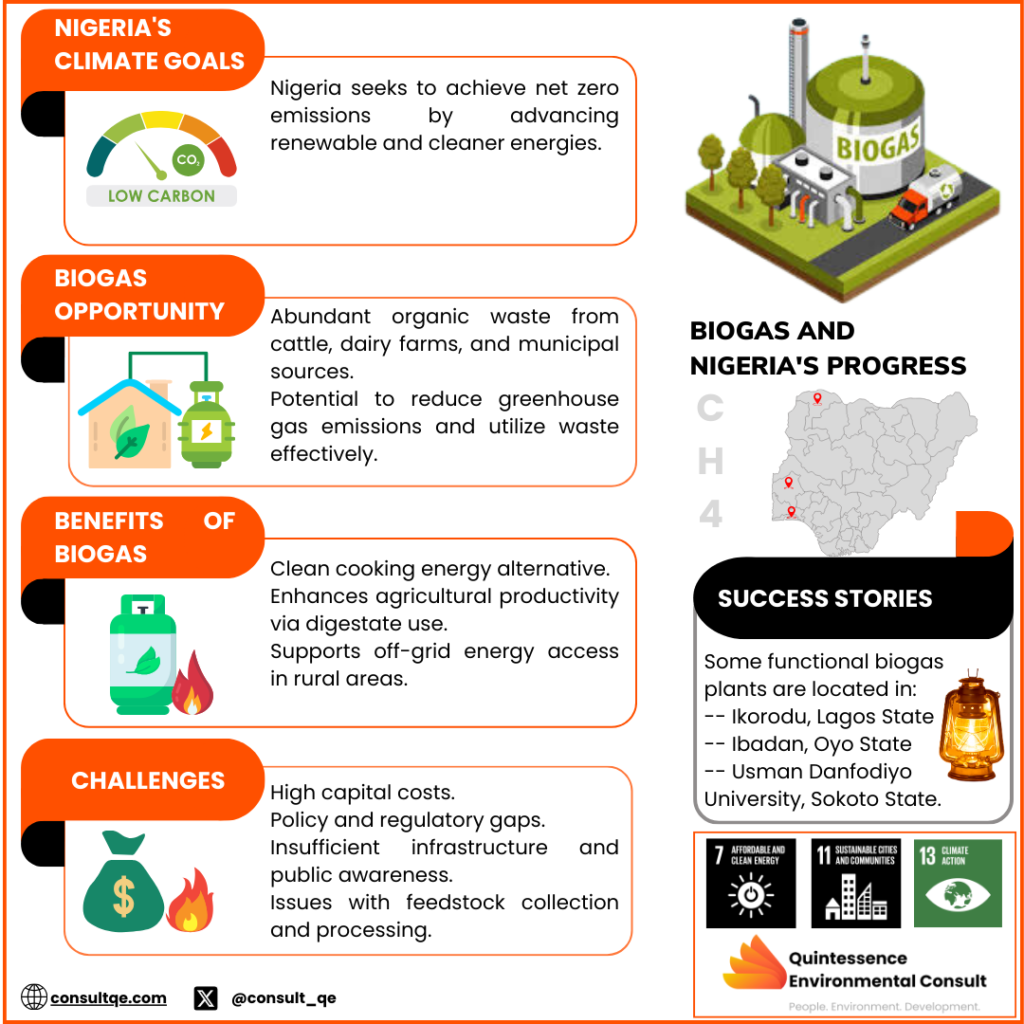
KEY TAKEAWAYS: Nigeria’s reliance on fossil fuel generated GHG emissionsof 100.389MT CO2 in the year 2022, ranking Nigeria to be 4th largest emitter of carbon in Africa. Anaerobic digesters are a great innovation for the country’s renewable energy options. Nigeria has abundant sources of organic waste suitable for biogas production. For instance cattle waste alone has the potential of yielding about 25.53 billion cubic meters of biogas about 169 541.66 MWh of electricity and 88.19 million tons of bio-fertilizer per annum. Biogas production offers diverse advantages, including reducing greenhouse gas emissions, providing clean cooking energy, improving agricultural productivity through digestate use, and supporting off-grid energy access for rural communities. Various projects, such as the biogas plants in Ikorodu-Lagos State, Ibadan-Oyo State, and Usman Danfodiyo University-Sokoto State, demonstrate the feasibility of biogas technology. Biogas production in Nigeria faces barriers like high capital costs, policy and regulatory gaps, lack of infrastructure, limited public awareness, and challenges with feedstock collection and processing. 2. OVERVIEW Nigeria is heavily reliant on fossil fuels, primarily oil, because it is one of the largest oil producers in Africa, with proven reserves of 37.50 billion barrels and a production capacity of approximately 2.19 million barrels per day (mbpd).13 Majority of its government revenue and export earnings come directly from crude oil sales, making its economy heavily dependent on this resource. Heavy dependence on fossil fuels due to its economic value creates significant environmental concerns. Fossil fuels account for more than 65% of the country’s greenhouse gas emissions, with an alarming GHG emissions of 100.389MT CO2 in the year 2022, ranking Nigeria to be 4th largest emitter of carbon in africa.10 As Nigeria takes strides toward achieving its climate and energy transition goals under the Paris Agreement, reducing this dependency will be critical for sustainability and energy security. Biogas produced from the anaerobic digestion of organic matter offers a plethora of benefits for Nigeria’s energy mix; due to its renewable and clean energy resource. In this report, we will explore the transformative potential of harnessing this technology to play a pivotal role in waste management and renewable energy production, offering a sustainable solution to environmental issues in Nigeria. SO, WHAT IS ANAEROBIC DIGESTION? Let’s first talk about Organic Matter. Organic matter comprisesorganic compounds resulting from the remains of decomposed previously living organisms such as plants and animals, and their waste products. Major sources of organic material for anaerobic digestion include dairy manure, food processing waste, plant residues, municipal wastewater, food waste, fats, oils, and grease. Anaerobic digestion (AD) is a biotechnological process that uses the diverse population of microorganisms to decompose organic matter in the absence of oxygen, resulting in the production of biogas—a renewable energy source primarily composed of methane (CH₄). The biotechnological process involves four stages: Hydrolysis, acidogenesis, Acetogenesis and Methanogenesis.10 The transformation of organic matter into biogas unveils anaerobic digesters as an environmentally sustainable and eco-friendly energy solution. BACKGROUND INFORMATION Nigeria’s commitments under the Paris Agreement include achieving NetZero by 2060 and transitioning to clean energy sources.15 As such, Nigeria pledged in its Nationally Determined Contribution (NDC) to adopt bioenergy as an alternative clean energy fuel to enhance its Energy Transition agenda. This supports Nigeria’s Long-Term Strategy for decarbonization, aiming to reduce emissions by 20% below the projected baseline levels by 2030, with a conditional target of achieving a 47% reduction within the same timeframe.16 As Nigeria takes firm strides towards a greener and more sustainable future, biogas emerges as a reliable clean energy technology to facilitate Nigeria’s NDC commitment. CURRENT STATUS OF BIOGAS PRODUCTION IN NIGERIA Although biogas plants are not yet familiar in the Nigerian energy market, some substantial work has been done and work is still in progress on it. For instance: The Usman Danfodiyo University, Sokoto, has designed a plant that can produce 425 litres of biogas per day, sufficient for basic cooking needs. Biogas Plant for electricity generation through gas produced from co-digestion of cassava peels and cow dung at a factory in Ibadan, Oyo State In 2019, the biogas plant at Ikorodu Mini Abattoir, in Lagos State, was capable of converting organic waste through the installation of four 5,000-litre digester tanks, fed with digestible organic waste and concentrated wastewater from the abattoir. Biogas generated was used to power the abattoir for close to six hours daily. The project was carried out by the Lagos State government, Friends of the Environment (FOTE) and HIS Biogas.3 BTNL Nigeria’s project at the Maximum Security Custodial Centre in Port Harcourt focuses on producing organic fertilizer from waste. This initiative aims to convert waste generated within the facility into valuable organic fertilizer, promoting sustainable waste management and supporting agricultural productivity.8 In addition, various research works on the science and technology of biogas production have been carried out by various scientists in the country. The Biogas Practitioners Association of Nigeria (BPAN) and Nigeria Biogas Association (NBA) have attested that despite biogas technology has proven to be a reliable and sustainable source of clean energy that could enable an affordable, reliable and available alternative clean energy solution in Nigeria it has only gained little legislative adoption and implementation in the Nigerian energy policy. 13 SIGNIFICANCE OF BIOGAS PRODUCTION Biogas production offers multifaceted benefits that address energy, environmental, and socio-economic challenges. It’s also suitable for all the various fuel requirements in the household, agriculture and industrial sectors. For instance, domestically, it can be used for cooking, lighting, water heating, running refrigerators, water pumps and electric generators. Agriculturally, it can be used on farms for drying crops, pumping water for irrigation and other purposes. In industries, it can be used in small-scale industrial operations for direct heating applications such as in scalding tanks. 2 Biogas production offers multiple benefits: Providing a sustainable alternative to fossil fuels, contributing to energy security and reducing reliance on non-renewable resources. Biogas systems capture methane emissions from decomposing organic waste that would otherwise escape into the atmosphere, reducing the overall greenhouse gas (GHG) impact, and significantly contributing to climate change mitigation. Anaerobic digestion