
Critical Minerals and the New Economic Frontier: A Path Toward Economic Growth and Sustainability in Nigeria
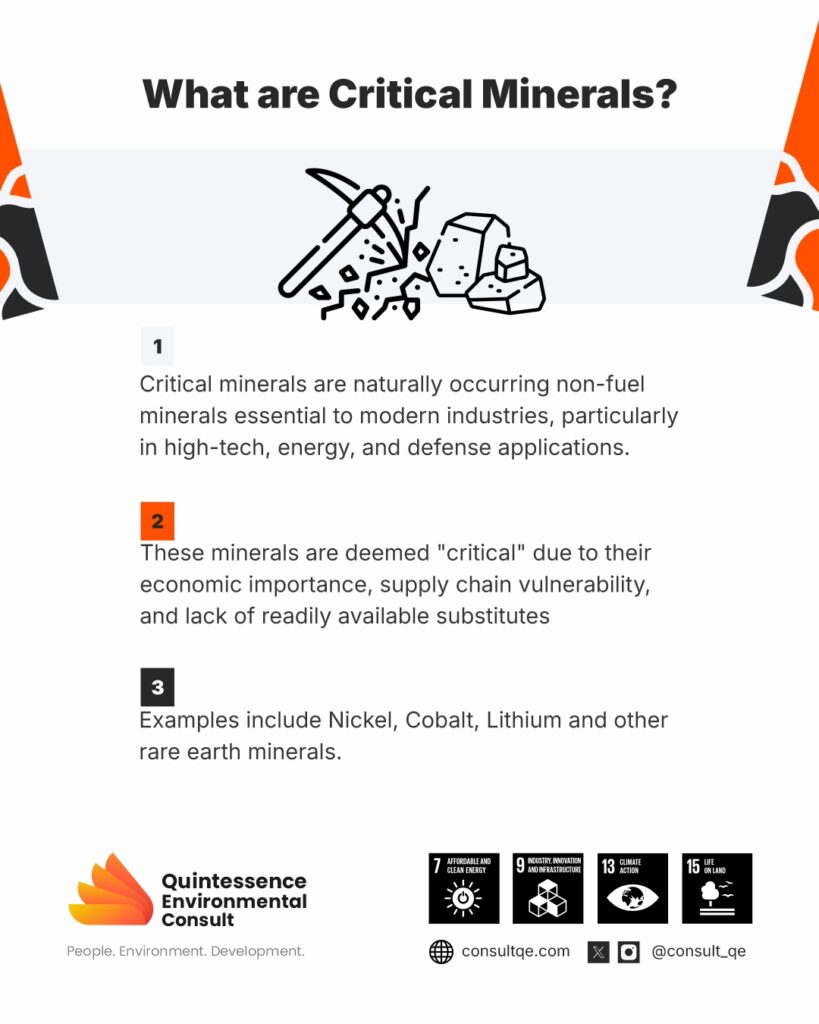
Key Takeaways Critical Minerals: Drivers of the New Global Economy Critical minerals are the fundamental components behind electric vehicles (EVs), solar panels, wind turbines, and other advanced electronics. With the global push for clean energy and innovation, the demand for these resources has skyrocketed. The Global Race Is On, Can Nigeria catch up? Countries such as the Democratic Republic of Congo, Chile and Indonesia are already dominating the critical minerals market. Although Nigeria possesses significant resources, it is still playing catch-up. Tin & Tantalum in Jos, Riruwai, Kogo, and other younger granite complexes have been mined since the 9th century. 3. Unlocking Nigeria’s Mineral Potential The airborne geophysical survey initiated in 2005 collected data in magnetic, radiometric, gravity, and electromagnetic domains for about 44% of Nigeria in 2006 and 55% completion in 2010 should be reviewed and given national priority. The Big Problem Nigeria’s critical minerals sector faces three major challenges: weak policies leading to missed opportunities, unregulated mining causing severe environmental damage, and a lack of local processing capacity, resulting in raw material exports instead of value addition. The Game Plan: How Nigeria Can Win Make Mining Laws Stronger: Regulations should encourage responsible mining, local processing, and transparency (no more illegal deals). Go Green: Mining shouldn’t destroy the land; eco-friendly techniques, land restoration, and community-driven projects should be a must. Invest in Mining Technology & Infrastructure: Nigeria needs processing plants, better transport networks, and modern mining tools to compete globally. Introduction Critical minerals are naturally occurring non-fuel minerals or materials essential to modern industries, particularly in high-tech, energy, and defense applications. These minerals are deemed “critical” due to their economic importance, supply chain vulnerability, and lack of readily available substitutes. In recent times, we have witnessed critical and rare earth minerals form integral parts of peace negotiations in the Russia-Ukraine war as well as the American Foreign Policy. In today’s global energy transition, minerals such as lithium, cobalt, nickel, and rare earth elements such as are indispensable for producing clean energy technologies, including solar panels, wind turbines, rechargeable batteries for electric vehicles (EVs), and grid storage systems. Developing countries hold large reserves of these minerals; for instance, African countries account for about 25 % of global reserves, including 19% of those needed for EVs. Global Demand and the Role of Developing Nations in the Global Supply Chain The global demand for critical minerals has surged due to their essential role in modern industries, clean energy technologies, and advanced manufacturing. These minerals are crucial for economic growth, technological advancement, and national security. For example; Clean Energy Transition: Minerals like lithium, cobalt, nickel, and rare earth elements (REEs) are vital for manufacturing batteries, solar panels, wind turbines, and electric vehicles (EVs). The global drive toward net-zero carbon emissions has further intensified the demand. Technological Advancements: Electronics, semiconductors, telecommunications, and defense systems rely on critical minerals such as tantalum, gallium, and neodymium for microchips, magnets, and advanced optics components. Industrial Growth & Infrastructure Development: The construction, automotive, and aerospace industries need materials like copper, aluminum, and titanium for wiring, machinery, and transportation. Geopolitical Considerations & Supply Chain Security: Many critical minerals are concentrated in specific regions, making supply chains vulnerable to geopolitical tensions, trade restrictions, and resource nationalism. Defense & Aerospace Applications: Minerals like tungsten, vanadium, and rare earths are essential for military equipment, jet engines, and missile systems, making them strategic assets for national security. This growing dependence on critical minerals has led countries and companies to secure their supply chains, invest in mineral exploration, and develop recycling technologies to meet demand sustainably. Developing nations are increasingly becoming key suppliers of essential minerals to the global market. For instance, the Democratic Republic of Congo contributes approximately 68% of the world’s cobalt imports, Chile plays a significant role in lithium exports, and Indonesia accounts for nearly 48% of global nickel exports. Since 2010, the demand for minerals per unit of energy generated has surged by 50%, largely due to the rising adoption of renewable energy sources. Projections for a net-zero emissions scenario indicate that, between 2022 and 2030, demand for certain critical minerals could grow dramatically—with cobalt up by 115% and lithium by an astonishing 454%.In response to the rising demand, a significant number of critical mineral projects were initiated in 2021 and 2022, marking a substantial increase in global efforts to secure mineral supply chains. (UN Trade and Development). The specific type and quantity of critical minerals required for the energy transition depend on their intended applications. Lithium, cobalt, and graphite, for example, are essential components of lithium-ion batteries used in electric vehicles (EVs). Prior to their use in advanced technologies, these minerals undergo processing and refining to enhance their purity, improve performance characteristics, and optimize their suitability for various applications. Compared to their raw forms, refined materials hold significantly higher economic value, offering mineral-producing developing nations opportunities to foster downstream industries and stimulate economic growth (UN Trade and Development). The New Gold Rush: Nigeria’s Untapped Treasure While Nigeria is not yet a major global supplier, its subsoil conceals a treasure trove of critical minerals such as lithium, cobalt, nickel, and rare earth elements- resources that power everything from electric vehicles to smartphones and solar panels distributed across different states. These resources are the backbone of the global energy transition, and countries worldwide are prompted to secure their supplies. Some of the key critical minerals found in Nigeria include: Lithium: Geological surveys have identified lithium-rich sites in Nasarawa, Kogi, Kwara, Ekiti, Cross River, and Bauchi. Nickel and Cobalt: In 2015, an Australian firm discovered a significant volume of high-grade nickel deposits in parts of Kaduna, Kogi, and Plateau. Nigeria is estimated to possess five million metric tonnes of Nickel and one of Africa’s largest reserves of cobalt. According to the Nigerian Geological Survey Agency (NGSA), the majority of Nigeria’s nickel reserves are located in Kaduna, Kebbi, Nasarawa, and Taraba. Rare Earth Elements (REEs): The key REEs found in Nigeria include Neodymium (Nd) (used in high – strength magnetics and various electronic applications), Cerium (Ce) (used
Circular Economy in Mining: The Hidden Treasures of Mining Waste
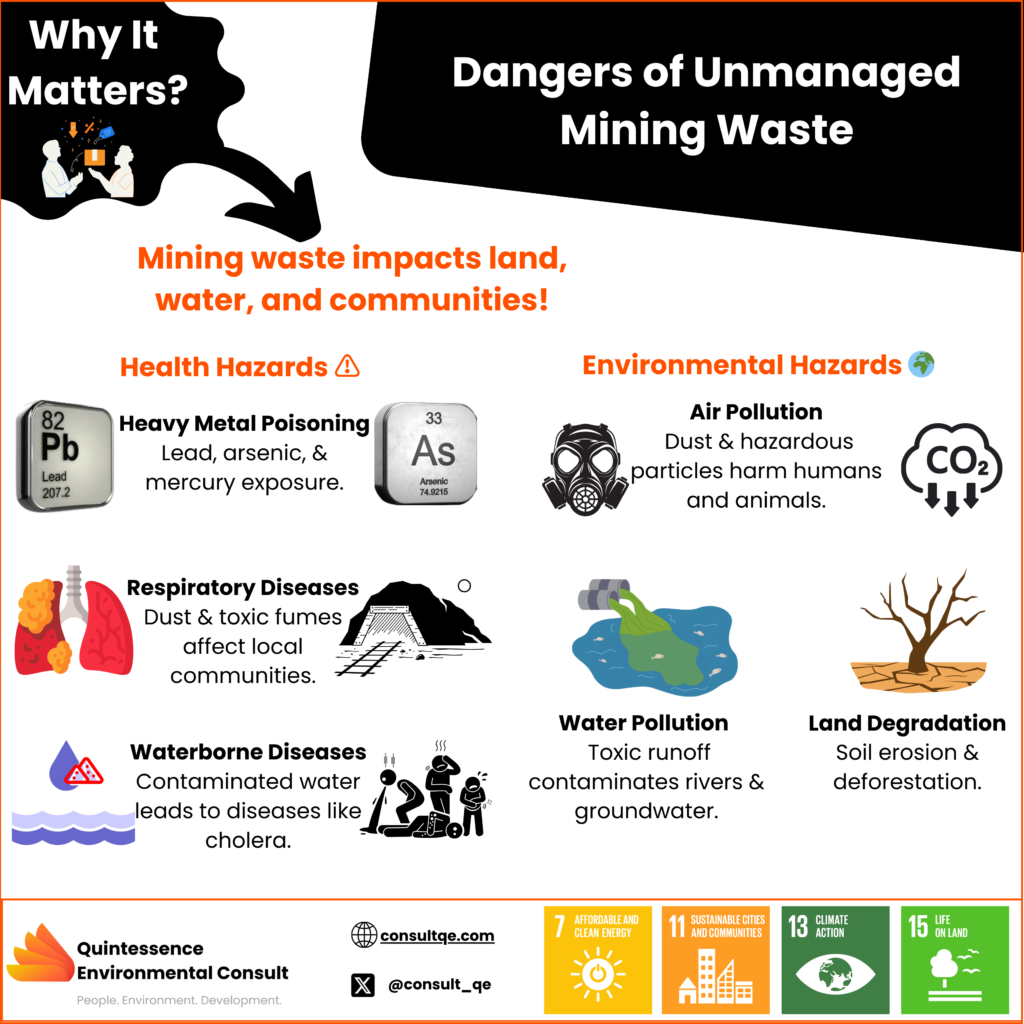
KEY TAKEAWAYS: Circular Economy Concept in Mining: The article highlights the shift from the traditional ‘take-make-waste’ model to a circular economy in mining, where waste is reused, recycled, and regenerated. Nigeria’s Mining Waste Challenge: Mining activities in Nigeria, particularly artisanal operations, generate significant waste that exacerbates environmental issues such as land degradation, water pollution, and health risks. Economic Opportunities in Recycling Mining Waste: Repurposing mining waste offers various benefits, such as using tailings in construction, recovering valuable minerals like rare earth elements and lithium, and treating mine water for agricultural use. Global Inspiration for Nigeria: Examples from countries like Australia and Canada illustrate how mining waste recycling can contribute to sustainable practices. Australia converts tailings into industrial bricks, while Canada focuses on extracting critical minerals from waste to support clean energy transitions. Call for Policy and Innovation: The article advocates for stringent regulations, investment in advanced technologies like bioleaching, public-private partnerships, and educational initiatives. INTRODUCTION Our nation Nigeria, although partially dependent on mining explorations for its economic growth has a pressing challenge that remains largely overlooked. Mining Waste is a hidden untapped treasure that could revolutionize our economy whilst protecting the environment. Hence, the concept of a circular economy in mining, whereby waste transformed into wealth, reduces environmental hazards, and fosters sustainability. WHAT EXACTLY IS A CIRCULAR ECONOMY IN MINING? A circular economy moves away from the traditional ‘take-make-waste’ model. Instead of discarding resources after use, materials are reused, recycled, and regenerated (Yiqing Zhao et al., 2011). In mining, this means utilizing waste products as valuable resources. Mining waste typically includes rocks, tailings, slags, and water contaminated during mineral extraction. While these materials have historically been abandoned or disregarded, advancements in technology and sustainable practices now allow them to be repurposed for economic and environmental gain. Imagine a Nigeria where the mountains of tailings from artisanal mining sites become raw materials for construction such as Bricks, Concrete, Foam ceramic and so on. NIGERIA’S MINING WASTE PROBLEM: A GROWING CONCERN Nigeria’s mining sector is expanding, particularly with activities in gold, lead, zinc, lithium, and other minerals. However, unregulated mining, especially artisanal mining generates an immense amount of waste and improper disposal exacerbates land degradation, water pollution, and health risks. In states like Zamfara, Niger, and Plateau, massive dumps of mining tailings dot the landscape, posing serious health risks due to heavy metals like lead, cadmium, and arsenic causing the death of Over 400 children due to exposure to lead-contaminated dust from artisanal gold mining waste (BBC News, 2010). Similarly, in Plateau State, abandoned tin mines have left behind pits that accumulate contaminated water, posing long-term environmental and public health risks (Ogundiran & Osibanjo, 2009). Take a look at the numerous granite quarries spread throughout the country, their inert waste has been classified on the European List of Waste under code 01 04 13, “wastes from stone cutting and sawing other than those mentioned in 01 04 07” (European Comission, 2000). It has a heavy environmental impact due to its adverse effect on soil permeability, for it hinders water seepage to the lower layers, which in turn affects aquifer recovery and plant life. It also constitutes a risk to human health due to the small percentage of crystalline silica in the fines which, if inhaled, may cause lung disease of varying severity (Singh et al., 2016). TRANSFORMING MINING WASTE INTO ECONOMIC OPPORTUNITY Recycling Tailings for Construction and Infrastructure The mining circular economy promotes sustainable practices by recycling and repurposing mining waste and byproducts. Materials like slag, fly ash, and calcium sulfate are utilized in construction and manufacturing industries, reducing waste and environmental impact. Residual heat is repurposed for heating and fermentation energy. Treated wastewater from mining operations serves as cooling water or process water, conserving resources and preventing pollution. This approach addresses resource scarcity, minimizes waste, mitigates environmental damage, and enhances resource efficiency, contributing to sustainable economic development. Mining tailings, particularly from granite or limestone extraction, can be processed into aggregates for building roads, bridges, and housing. When managed appropriately, these materials reduce dependency on virgin resources like river sand, which are being overexploited. The abandoned tin mine tailings could be repurposed for road construction projects, particularly in rural areas where infrastructure remains underdeveloped. This approach creates jobs whilst addressing Nigeria’s critical infrastructure deficit. Repurposing mining tailings for construction offers economic and environmental benefits, but it also raises health and safety concerns due to residual toxins like silica dust, heavy metals, and radioactive elements. Inhalation of crystalline silica can cause lung diseases such as silicosis, while exposure to heavy metals like lead and arsenic poses serious health risks. Therefore, rigorous safety standards must be enforced to ensure safety in repurposing the waste, including; Comprehensive Material Testing: Ensuring tailings are free from hazardous levels of toxins before use. Proper Processing Techniques: Using encapsulation, stabilization, and chemical treatment to neutralize harmful substances. Workplace Safety Measures: Implementing dust control systems, protective gear, and regular health monitoring for workers. Regulatory Compliance: Establishing strict national guidelines aligned with global best practices (e.g., WHO, EPA) for safe waste utilization Other uses for tailings include; Shotcrete: Tailings can be used to make commercial shotcrete. Concrete: Tailings can be used to make concrete products for mine roads. Insulation: Tailings can be used to make insulation. Foamed products: Tailings can be used to make foamed products Recovering Valuable Minerals from Waste What many fail to realize is that mining waste often contains residual amounts of valuable minerals. Advances in technology now make it economically viable to recover precious metals such as silver, and rare earth elements (REEs) from tailings. In China, rare earth elements are extracted from mine tailings and used in electronics, renewable energy technologies, and electric vehicle components. Nigeria, with its untapped lithium and other critical minerals, could adopt similar practices to supply materials needed for the global energy transition. Reusing Mine Water for Agriculture Mine water can come from two primary sources: groundwater seepage into mine excavations or wastewater generated from ore processing. Often, this water becomes contaminated with chemicals, making it
Mining without Poison: Addressing the Threat of Heavy Metals in Mining
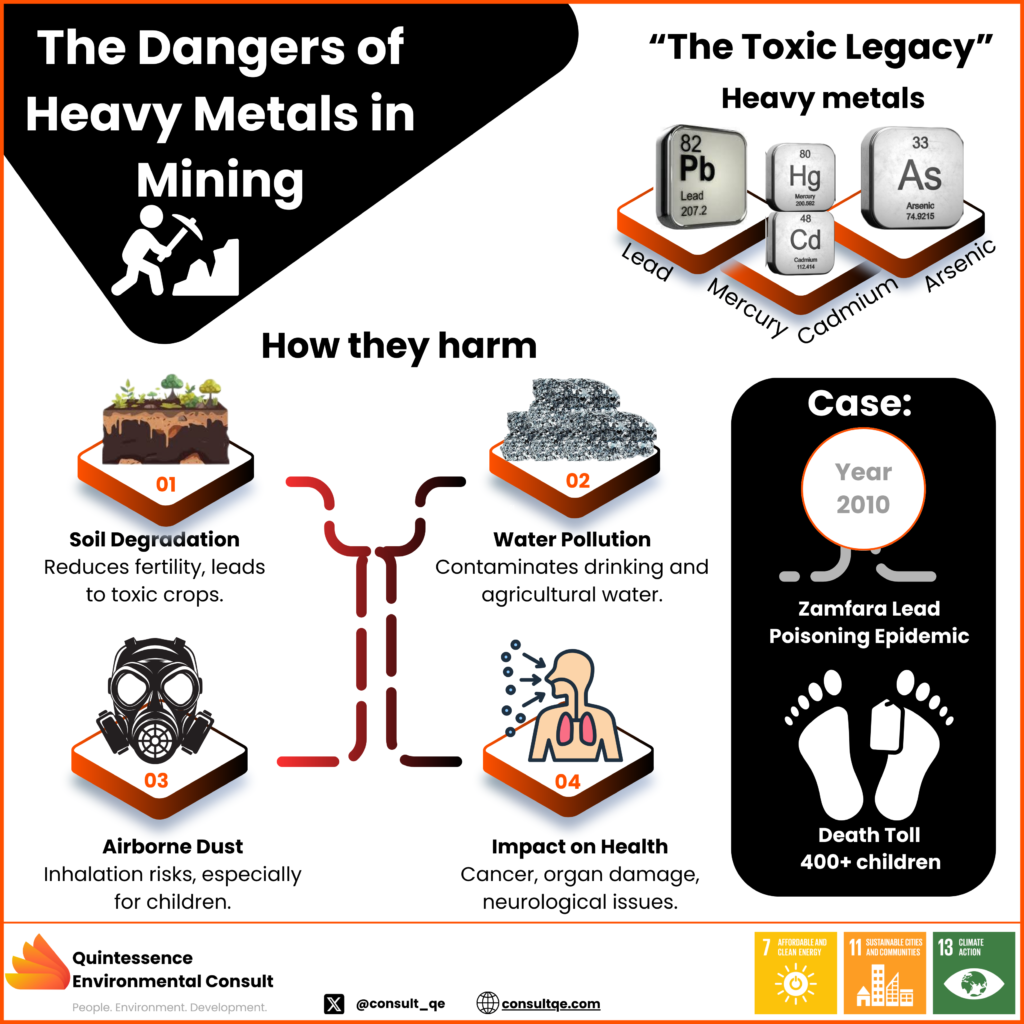
KEY TAKEAWAYS Mining activities release toxic heavy metals such as lead, mercury, and cadmium, posing significant threats to water, soil, air, and human health. Incidents like the 2010 Zamfara lead poisoning epidemic underscore the devastating consequences of unregulated practices. Communities are affected through runoff from mining, which contaminates water sources and impacts drinking water, farming, and aquatic life. Heavy metals reduce soil fertility, disrupt agriculture, and threaten food security. Dust from mining activities contains toxic particles that harm respiratory health, especially among vulnerable populations. Sustainable mining solutions, such as training programs, waste recycling (of mining byproducts), regulation enforcement, and the adoption of mercury-free technologies, should be implemented to reduce pollution risks. The Nigeria-France MoU on critical minerals supports the green energy transition. It emphasizes the importance of sustainable practices in mining to mitigate negative impacts while benefiting from international partnerships. Sustainable mining is crucial for balancing economic opportunities with environmental and societal needs. By adopting safer practices, Nigeria can ensure that its mineral wealth contributes to long-term prosperity without compromising ecosystems or public health. INTRODUCTION Mining activities in Nigeria date back to prehistoric times, with early humans extracting iron, clay, and other minerals for crafting tools, cosmetics, and utensils. The industry was formalized in 1903 when the British colonial administration initiated systematic mineral surveys across the Northern and Southern Protectorates. Over the years, mining has become a pivotal economic driver, fostering industrial growth and providing employment opportunities in communities rich in mineral resources. However, beneath the allure of minerals lies an often-overlooked risk: the threat of heavy metals to life. Mining for resources such as gold, lead, and tin releases heavy metals like mercury, cadmium, and arsenic, which can persist in the environment for decades. These pollutants infiltrate water bodies, degrade agricultural land, and pose severe health risks, including neurological and respiratory issues. To address these hazards, the incorporation of sustainable mining practices is essential. DANGERS OF HEAVY METALS IN MINING Firstly, let us look at what these Heavy metals are. Heavy metals are metallic elements that are toxic or poisonous at low concentrations and have a relatively high density. While naturally occurring, they become hazardous when concentrated or exposed to mining processes. Metals like Lead, Cadmium, and Mercury can seep into waterways, be inhaled as dust, or even accumulate in soils, poisoning plants and animals in the process. When the presence of these toxic nuclides in the environment is enhanced, they will find their way into the human system either by ingestion, inhalation or dermal contact leading to severe health effects like cancer, and damaging important body organs leading to death in some cases 1. Tailings from the gold and beryllium mining activities are often dumped in the immediate environment in tons. This dumping of tailings usually contains higher concentrations of these poisonous elements which is allegedly the leading cause of human exposure that could bring about severe human health effects like arsenicosis, cancer etc., damaging important body organs that could lead to death in some cases 2. Heavy metals are an ongoing concern, particularly in communities surrounding mining sites such as Enyigba (Abakaliki, Ebonyi state), Maru (Zamfara state), Rimin Zayan (Toro, Bauchi state), Tsofo (Birnin Gwari, Kaduna state) and so on. In Osun State, Nigeria, Ilesha and its surrounding areas, including Epe, Igun, and Ijana, are major centers for gold mining due to abundant deposits. However, illegal mining operations have surged, potentially resulting in the contamination of waterways and nearby soils with heavy metals. Studies have indicated that these mining sites are often located near farmlands, where chemicals from the soil may accumulate in arable and cash crops, ultimately leading to severe heavy metal contamination of water sources and posing risks of poisoning to humans and animals if ingested 3. A tragic case unfolded in areas of Maru, Bukkuyum, and Maru in Zamfara State, where artisanal gold mining exposed people to Lead dust, resulting in a devastating Lead poisoning epidemic in 2010. Over 400 children died, and many more suffered long-term health effects due to exposure 4. This heartbreaking example illustrates the dire consequences of unsustainable mining practices and serves as a wake-up call. HOW HEAVY METALS POLLUTE THE ENVIRONMENT AND HARM COMMUNITIES As we already mentioned, mining activities can release heavy metals into the environment in various ways including: Water Pollution: Heavy metals often wash away via runoff from mining sites into rivers, lakes, and underground water sources. This contamination affects drinking water and water used for farming, fishing, and livestock. For example, water bodies in areas with Lead-zinc mining activities, such as Enyigba in Ebonyi State, have shown elevated levels of Lead 5, which could have detrimental impacts on nearby communities who rely on these sources. Soil Contamination: Metals like Cadmium and Lead can accumulate in the soil, rendering farmland infertile or causing toxic crops to grow. In mining-intensive areas, farmers are often forced to abandon affected lands or switch to less nutritious crops, disrupting food security and local economies. Airborne Toxic Dust: Dust particles from mining activities can contain harmful aerosols and heavy metals, which are easily inhaled by residents near mining sites. Children are particularly vulnerable to this exposure. Heavy metal dust from mining areas, such as those in Jos, Plateau State, has posed risks to local communities, showing elevated levels of metals that are known to cause severe health issues 6. MOVING TOWARD SAFER MINING PRACTICE a. Promoting and Supporting Artisanal Mining Training Programs Artisanal miners, who make up a large portion of Nigeria’s mining workforce, often lack training in safe mining practices, thereby exposing themselves and the environment to risks of contamination. Programs that teach miners safer methods, including using less harmful chemicals and protective gear, can dramatically reduce risks. The Nigerian Ministry of Mines and Steel Development has conducted such safety awareness programs in various mining communities, helping to reduce hazardous practices and promote safer alternatives 7. However, more needs to be done to reach a greater number of artisanal miners in the country. b. Recycling Mining Waste In mining, waste is
Understanding the Recent Earth Tremors in Abuja: Causes and Mitigation Strategies
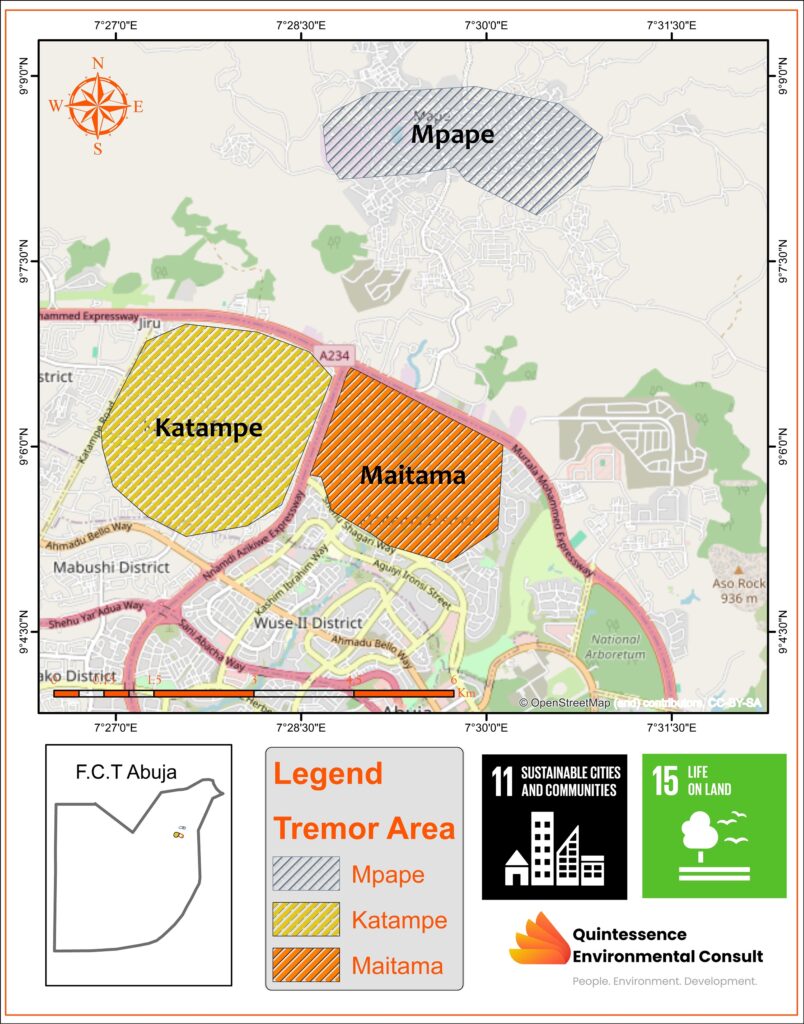
INTRODUCTION Abuja, the capital of Nigeria and sixth most populous city in the country has been experiencing earth tremors. Over the last couple of years a series of earth tremors have been reported particularly in the areas of Mpape, Katampe, and Maitama. The notable incidents were reported in 2018 and 2019 with the recent one occurring in September 2024. DIFFERENCE BETWEEN TREMORS AND EARTHQUAKES To understand the nature of these tremors, it is crucial to explore their causes and how they impact society and the environment. For example, earthquake tremors are natural geological events that occur when there is a sudden release of energy in the Earth’s crust caused by some geological factors such as plate tectonics, underground fluids, and volcanic eruptions. But primarily, most earthquakes are caused by the movement of large, solid pieces of the Earth’s crust, called tectonic plates. Tectonic plates are massive, irregularly shaped pieces of solid rock that make up the Earth’s crust and have been constantly in motion for billions of years (USGS). As such, friction at their edges can cause them to get stuck and when the stress on the edge overcomes the friction, the plates release energy in waves as mentioned earlier. The release of energy generates what is called seismic waves, which are of two types, including body waves and surface waves. Body waves travel through the earth’s interior after being generated and are the first seismic waves to arrive at the seismograph. Surface waves, on the other hand, travel along the earth’s surface and are responsible for the significant impacts that we see depending on some factors such as the local geology, depth, and magnitude. It is also crucial to understand that the magnitude of the wave is what differentiates an earthquake and an earth tremor. When a tremor exceeds “Five” on the moment magnitude scale (which goes from 0 to 10), it is called an earthquake. WHY TREMORS IN ABUJA? So why is Abuja experiencing these tremors when Nigeria isn’t located in major seismic zone? Well, remember we said earthquakes occur when there is a sudden release of energy in the earth’s crust caused by the sudden movement along a fault plane, which is a fracture in the earth’s crust along which displacement has occurred? Such fault lines are known to exist beneath Abuja and nearby areas. Ifewara-Zungeru fault is considered the primary natural geological feature responsible for most tremors experienced in Nigeria (Akpan and Yakubu, 2010), including those occurring in Abuja, as it runs through a large portion of the country and is considered the main source of seismic activity in the region; therefore, recent tremors in Abuja could be linked to geological activities along this fault line. Even though the primary cause of earth tremor remains natural. Human activities, such as rock blasting, indiscriminate mining, and improper borehole drilling in the area, can exacerbate the natural stress buildup, contributing to the occurrence of tremors. It is noteworthy that Abuja has already been exposed to unregulated drilling and blasting of rocks by quarrying companies and artisanal miners. After the September 2018 Abuja tremor, the Presidential Committee set up by the Federal government reported the need to regulate the exploitation of groundwater resources in Abuja via indiscriminate sinking of boreholes. Some key questions linger in our minds: Will these tremors keep happening? What are the impacts on the environment and livelihoods? One thing is certain, the phenomenon is typical in regions with active fault lines, and may likely reoccur in Abuja. WHAT DO WE DO? While it is not entirely possible to prevent the natural occurrence of tremors and earthquakes, several mitigation strategies and safeguard measures can be employed to lessen their impact: Ensuring that buildings and infrastructure are constructed in such a way that they can withstand ground shaking, especially in the areas prone to tremors (Mpape, Katampe, and Maitama). Strict regulations for quarry miners should mandate the adoption of controlled blasting techniques, compliance with environmental impact assessments, and mandatory seismic evaluations to minimize risks, especially in fault-line areas where blasting may need to be restricted or banned. Engineers and planners should work with geologists and seismologists to map tremor-prone zones, advise local authorities on restricting certain infrastructure developments like hospitals and schools, designate safe zones for new projects, and advocate relocating vulnerable infrastructure from high-risk areas. Residents should be educated on safety measures and life-saving actions to help them during and after a tremor. Similarly, residents should develop family emergency plans, keep emergency kits with essentials, identify safe spots in their homes, follow earthquake-proofing guidelines, and be trained in basic emergency response techniques like “Drop, Cover, and Hold On. Establishing and expanding more seismic monitoring stations across the Federal Capital Territory and ensuring real-time tracking of seismic activities, accurate data, and prompt alerts. REFERENCES Thomas, J & George, Nyakno & Ekanem, Aniekan & Nathaniel,. (2020). Preliminary investigation of earth tremors using total electron content: a case study in parts of Nigeria. NRIAG Journal of Astronomy and Geophysics. 9. 220-225. 10.1080/20909977.2020.1723866. Advances in Multidisciplinary and scientific Research Journal Publication. (2017). https://doi.org/10.22624/aims Akpan, O.U., Yakubu, T.A. A review of earthquake occurrences and observations in Nigeria. Earthq Sci 23, 289–294 (2010). https://doi.org/10.1007/s11589-010-0725-7 Earthquakes: Tremors from below | AMNH. (n.d.). American Museum of Natural History. https://www.amnh.org/explore/ology/earth/earthquakes-tremors-from-below Earthquake tremor causes & effects. (n.d.). History. https://vocal.media/history/earthquake-tremor-causes-and-effects THE ABUJA EARTH TREMORS – THISDAYLIVE. (2024, September 25). https://www.thisdaylive.com/index.php/2024/09/25/the-abuja-earth-tremors/ What is a tectonic plate? [This Dynamic Earth, USGS]. (n.d.). https://pubs.usgs.gov/gip/dynamic/tectonic.html