
Flooding in Maiduguri, Borno State: A Complex Interaction of Natural and Human Factors
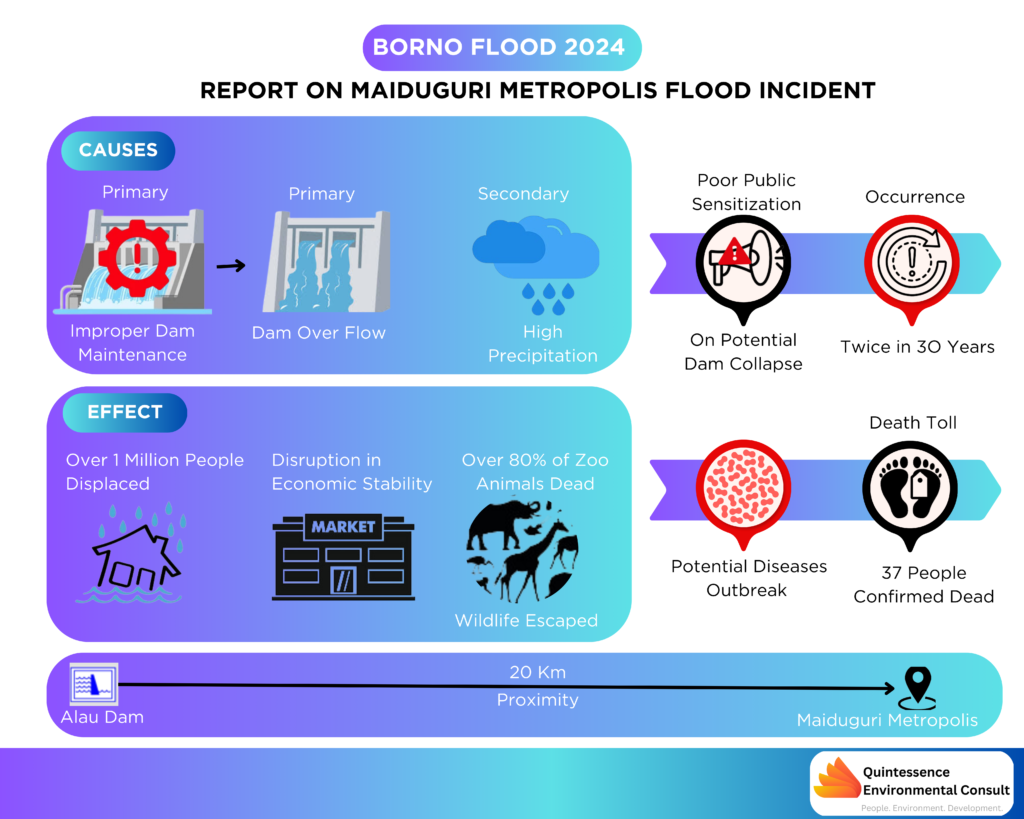
Location Maiduguri Metropolitan Council, Jere and Konduga, Borno State, Nigeria Incident Date Tuesday, September 10, 2024 Background Nearly a week after the flood incident in Borno State which flooded Maiduguri and its environs, the magnitude of devastation has left observers and experts alike in awe. Relevant emergency and humanitarian agencies have been overwhelmed due to limited logistical support to evacuate and relocate victims. So far, over 300,000 temporarily displaced people have been registered in 30 relocation sites. Primary Cause of Flood Collapse of the Alau Dam on the Ngadda River due to torrential rainfalls in the region and increased runoff was established to be the primary cause of the flood, making it the worst in 30 years. The last flood that occurred under similar conditions happened in 1994. General Impact Broader Context of Flooding in Maiduguri Maiduguri, the capital of Borno State, Nigeria and its environs have experienced recurrent flooding incidents in recent years, causing significant damage to property, infrastructure, and livelihoods. In the latest incident of flood, the primary cause is attributed to the poor maintenance of the Alau Dam which yielded to the large volume of rainfall. Meanwhile, there are other secondary causes of the flood which are complex and multifaceted, involving a combination of natural and human-induced factors. Natural Factors Human Induced Factors Call to Action Enhance Collaboration and Communication: For disasters of this scale, improving collaboration and effective communication among relevant stakeholders is essential to enhancing evacuation efforts and coordinating relief activities. Increase Immediate Humanitarian Response: Prioritize the rescue and relief efforts for affected individuals, providing them with essential supplies like food and WASH services to contain the spread of diseases. , water, shelter, and medical care. Improve Long-Term Disaster Preparedness: Develop and implement comprehensive flood prevention and mitigation plans, including early warning systems, drainage improvements, and community-based disaster preparedness initiatives. In addition, the authorities must ensure that the Alau dam is fully rehabilitated by conducting a thorough structural and hydraulic rehabilitation. Improve Urban Planning and Infrastructure: Ensure sustainable urban development practices that consider flood risks, such as avoiding construction in flood-prone areas and implementing proper drainage systems. Enhance Climate Change Mitigation: Support climate change mitigation efforts to reduce the frequency and severity of extreme weather events, including floods. This can involve promoting renewable energy, reducing greenhouse gas emissions, and implementing sustainable land use practices. Advance International Cooperation: Seek international assistance and collaboration to address the long-term impacts of the flood, including funding for reconstruction efforts, knowledge sharing, and capacity building.
The Triple Planetary Crisis: What Is It?

The Triple Planetary Crisis: What Is It? The triple planetary crisis isn’t just a catchy phrase; it represents the critical juncture we find ourselves in. Here’s a breakdown of the three components: The Interconnected Web These three crises aren’t isolated; they weave together, exacerbating one another. Here’s how: Solutions and Hope Remember, we’re not powerless. By understanding the triple planetary crisis and taking action, we can steer our planet toward a more sustainable and resilient future. Sources: UNFCCC, AIDA Americas