
POWER-TO-X (P2X) TECHNOLOGY IN NIGERIA: OPPORTUNITIES AND CHALLENGES
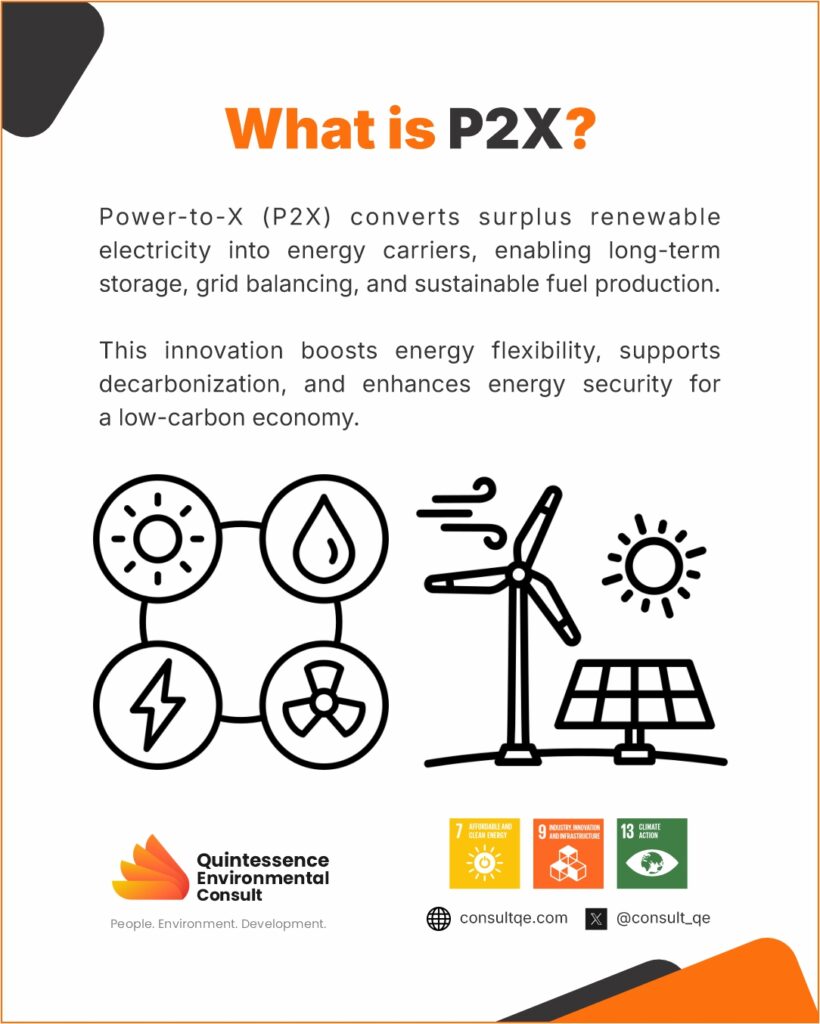
KEY TAKEAWAYS: Renewable Energy Utilization: P2X technology can harness Nigeria’s vast solar and wind resources to produce green hydrogen, ammonia, and synthetic fuels, enhancing energy security and sustainability. Energy Storage & Grid Stability: It enables long-term energy storage and grid balancing by converting excess renewable electricity into hydrogen and other energy carriers. Industrial Growth: Adoption of P2X can drive job creation, boost industrial development, and position Nigeria as a key player in the global hydrogen market. Decarbonization & Climate Goals: It supports Nigeria’s commitment to the Paris Agreement by reducing carbon emissions in industries like transportation, manufacturing, and agriculture. Recommendation: High initial costs, infrastructure gaps, and regulatory challenges must be addressed through national hydrogen strategies, investment in research, and workforce training. Nigeria’s energy sector faces a complex interplay of factors: a heavy dependence on fossil fuels, a rapidly increasing demand for electricity, and a wealth of untapped renewable energy potential. This convergence of circumstances creates exciting opportunities and significant hurdles for adopting innovative energy technologies. As Nigeria strives for a sustainable energy future, these emerging technologies have the potential to revolutionize the nation’s energy landscape. Power-to-X (P2X) stands out as a particularly promising solution. P2X encompasses a range of cutting-edge technologies that transform excess renewable electricity into valuable energy carriers like hydrogen, ammonia, and synthetic fuels. This capability offers solutions to several pressing challenges, including stabilizing the power grid, providing large-scale energy storage, and decarbonizing various sectors of the economy. These solutions are not only vital for bolstering Nigeria’s energy security but are also crucial for achieving its industrial growth objectives(3,7). This blog post will delve into the specific opportunities and challenges that P2X presents within the Nigerian context. WHAT IS POWER-TO-X (P2X)? Power-to-X (P2X) represents a suite of innovative technologies that convert surplus renewable electricity into various energy carriers, enabling the integration of renewable energy across multiple sectors. This approach addresses the intermittency of renewable sources by storing energy in chemical forms, thereby enhancing energy system flexibility and contributing to decarbonization efforts. By converting renewable electricity into various energy carriers, P2X provides solutions for long-term energy storage, grid balancing, and the production of sustainable fuels and chemicals. This integration supports the transition to a low-carbon economy and enhances energy security (2,7). CORE PROCESSES IN P2X Electrolysis Electrolysis is the foundational process in P2X, where electrical energy is used to split water (H₂O) into hydrogen (H₂) and oxygen (O₂). The hydrogen produced serves as a foundational element for various synthetic fuels and chemicals. There are three main types of electrolyzers: Alkaline Electrolyzers (AEL): Mature technology with lower costs but lower efficiency. Proton Exchange Membrane Electrolyzers (PEM): Higher efficiency and flexibility but more expensive. Solid Oxide Electrolyzers (SOE): High-temperature operation with the highest efficiency but still in the developmental stage (3). Synthesis Hydrogen generated through electrolysis can be combined with carbon dioxide (CO₂) or nitrogen (N₂) to produce a range of fuels and chemicals, such as: Methanation: Hydrogen reacts with CO₂ to produce synthetic methane (CH₄), a renewable alternative to natural gas. Fischer-Tropsch Synthesis: Converts hydrogen and CO₂ into liquid hydrocarbons, such as synthetic diesel or jet fuel. Haber-Bosch Process: Combines hydrogen with nitrogen to produce ammonia (NH₃), a key component in fertilizers and a potential energy carrier. (2) KEY P2X PATHWAYS P2X technologies can be categorized into several pathways based on the end product (6): Pathway Description Applications Power-to-Gas (P2G) Converts renewable electricity into gaseous fuels like hydrogen and methane. Hydrogen production, Grid balancing, synthetic methane for heating and transportation. Power-to-Liquids (P2L) Produces liquid fuels such as synthetic diesel and jet fuel. Aviation, shipping, and heavy-duty transportation Power-to-Chemicals (P2C) Enables the production of chemicals like ammonia and methanol. Fertilizers, industrial chemicals, and energy carriers. Power-to-Heat (P2H) Converts electricity into heat for industrial or district heating systems Industrial processes and residential heating. HISTORICAL CONTEXT AND GLOBAL DEVELOPMENTS The concept of P2X emerged in the early 2010s as a response to the growing need for energy storage solutions to address the intermittency of renewable energy sources. Countries like Germany, Saudi Arabia, South Africa and Japan have been pioneers in P2X research and deployment. For instance: Germany’s Energiewende: Germany has invested heavily in P2X technologies as part of its energy transition strategy, with projects like the Hybrid Power Plant in Prenzlau integrating wind energy with hydrogen production, the GETH Nucleus Project (300 MW Capacity 2027), and the Green Wilhelmshaven Project (1 GW electrolyzer capacity by 2028) (2). South Africa: Hydrogen South Africa (HySA) initiative focuses on green hydrogen for export (4). Saudi Arabia: NEOM project aims to produce 650 tons of green ammonia daily using solar and wind energy. Japan’s Hydrogen Society: Japan has set ambitious targets to become a hydrogen-based economy, leveraging P2X technologies to produce green hydrogen and ammonia (5). WHY DOES P2X MATTER FOR NIGERIA? Nigeria’s energy landscape is at a pivotal juncture, with Power-to-X (P2X) technologies emerging as a transformative force in the nation’s pursuit of sustainable and resilient energy solutions. Globally, countries are investing heavily in P2X technologies to decarbonize their economies and enhance energy security. For instance, Germany has initiated significant research projects into P2X options, recognizing their potential to integrate renewable energy across sectors (2). Nigeria, endowed with abundant renewable resources, is well-positioned to leverage P2X technologies. The nation’s substantial solar radiation and wind potential provide a solid foundation for generating the renewable electricity necessary for P2X processes. By converting this renewable energy into various forms, Nigeria can address energy storage challenges, reduce greenhouse gas emissions, and stimulate economic growth (1). Energy Storage and Grid Stability Nigeria’s abundant renewable energy resources, particularly solar and hydro, are characterized by intermittency, posing challenges for grid stability and reliable power supply. P2X technologies offer a viable solution by converting excess renewable electricity into hydrogen through electrolysis. This hydrogen can be stored and later reconverted into electricity during periods of high demand or low renewable generation, thereby enhancing grid stability. A comprehensive review in Energies highlights that P2X processes can effectively address the intermittency of renewable energy sources, providing large-scale and long-term energy storage solutions (6). Decarbonization and Climate Goals The